


Chapter 5SHG-Bank Linkage Programme: Moving from Financial Inclusion to overall wellbeing
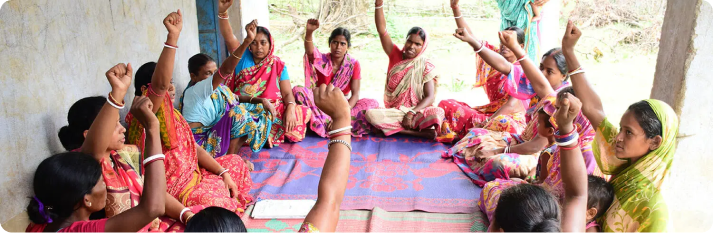
The Self-Help Group-Bank Linkage Programme (SHG-BLP) launched by NABARD in 1992 remains one of India’s most enduring and extensive community-based financial inclusion initiatives. Built on the principles of regular savings, internal lending, peer accountability and access to formal credit, the programme has enabled millions of low-income households-particularly rural women-to establish a relationship with the formal financial system.

SHG-Bank Linkage Programme: Moving from Financial Inclusion to overall wellbeing
5.1 Introduction
The Self-Help Group-Bank Linkage Programme (SHG-BLP) launched by NABARD in 1992 remains one of India’s most enduring and extensive community-based financial inclusion initiatives. Built on the principles of regular savings, internal lending, peer accountability and access to formal credit, the programme has enabled millions of low-income households-particularly rural women-to establish a relationship with the formal financial system. Over time, SHGs have evolved beyond informal savings-and-credit collectives into important local institutions supporting livelihoods, social protection, financial awareness and women’s participation in household and community decision-making. It acts as a bridge connecting unbanked rural households with formal financial institutions, scaling rapidly alongside government interventions like the Deendayal Antyodaya Yojana – National Rural Livelihoods Mission (DAY-NRLM).
The relevance of SHG-BLP has grown further amid uneven household incomes, climate-related livelihood risks, health expenditure pressures and the need to foster sustainable rural enterprises. For vulnerable households, access to a bank account or a first-cycle loan is only the beginning of financial inclusion. Meaningful financial inclusion requires timely and adequate access to repeat credit, access to savings, insurance, pensions and digital payments, as well as the capability to use these financial services safely and productively. The National Strategy for Financial Inclusion 2025-30 similarly places financial inclusion within a broader framework of human development, household resilience and well-being.
FY 2025-26 therefore represents an important transition point for the SHG-BLP. The focus is gradually shifting from the expansion of savings and credit linkage towards the quality of financial access. This includes whether SHGs receive credit in time, whether loan sizes are adequate for their livelihood needs, whether mature members are able to graduate to individual or collective enterprise finance, and whether digital tools improve transparency and reduce transaction costs. The broader dimension of inclusion also encompasses the extent to which SHG members are able to access government social-protection schemes, such as insurance, pensions, health protection, housing and employment support.
The SHG ecosystem is also being called upon to play a wider economic role. The Central and State Governments realised the strength of the SHG movement and adopted it for implementing several programmes, mostly targeted at the poor. With a view to achieving universal financial inclusion through SHGs, the Ministry of Rural Development, Government of India, launched the National Rural Livelihoods Mission (NRLM)1 in 2011 by restructuring the Swarnajayanti Gram Swarojgar Yojana (SGSY). NRLM, later christened DAY-NRLM, is the world’s largest poverty alleviation program and is based on the concept of SHG-BLP.
Under DAY-NRLM and allied initiatives, SHGs and their federations are increasingly being linked with enterprise development, producer collectives, skill-building, market access, community resource persons and collective asset-based activities. The evolving policy thrust on women-led enterprises, Lakhpati Didi, digital bookkeeping, real-time banking solutions and collective business models creates new opportunities for SHG members. However, these opportunities must be supported by sound credit appraisal, market linkages, business-development services, risk mitigation and continuous handholding.
Despite the growth in SHG Bank linkage programme in the country, many groups continue to face delayed credit linkage, inadequate finance, reluctance for repeat finance, variations in bank-service quality, weak digital connectivity, limited enterprise capacity and uneven performance across states and districts. The quality of group functioning, federation support, financial literacy and member-level agency remains as important as the scale of programme outreach. The next phase of SHG-BLP must therefore combine outreach with customer protection, responsible finance, digital inclusion and measurable livelihood outcomes.
This chapter reviews the progress of the SHG-Bank Linkage Programme during FY 2025–26 and examines its evolving role in advancing women’s economic empowerment and household resilience. It analyses trends in savings, bank credit, portfolio quality and regional outreach, while also assessing the movement towards digital finance, enterprise graduation, and collective livelihoods. The chapter argues that the future success of SHG-BLP should be measured not only by the number of groups linked to banks, but by the extent to which SHG members achieve sustained access to appropriate finance, viable livelihoods and greater economic security. The focus, therefore, needs to move beyond outreach and linkage towards the quality, effectiveness, and longer-term outcomes of financial inclusion.
1 www.nrlm.gov.in
5.2 Overview of the SHG-Bank Linkage Programme
The Self-Help Group-Bank Linkage Programme (SHG-BLP), initiated by NABARD in 1992, remains a cornerstone of India’s financial-inclusion architecture and women’s economic empowerment. Over time, SHG-BLP has evolved beyond a savings-and-credit intervention into a platform for livelihood promotion, enterprise development, digital finance and access to social-protection services.
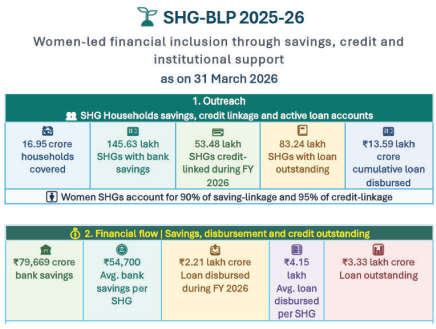
As of 31 March 2026, the SHG-BLP covered 145.63 lakh savings-linked SHGs, with aggregate savings of ₹79,669 crore. The programme reached 16.95 Cr. households, of whom a substantial proportion were women. Exclusive women SHGs saving-linked with banks accounted for 131.06 lakh groups, or over 90% of the savings-linked SHGs. The key statistics under SHG-BLP for FY 2025-26 are delineated in Table 5.1
Table 5.1: Key Statistics under SHG-BLP
| Sl. No. | Indicators | FY 2025-26 | FY 2024-25 | Change |
|---|---|---|---|---|
| 1 | Total number of SHGs saving-linked with banks (in Lakh) | 145.63 | 143.3 | 2.33 |
| Percentage of NRLM/NULM Groups | 77% | 74% | 3% | |
| 2 | Total saving amount of SHGs linked with banks (₹ in Cr.) | 79,669 | 71,433 | 8,236 |
| Percentage of women groups linked | 90% | 86% | 4% | |
| Percentage of NRLM/ NULM groups | 83% | 81% | 2% | |
| 3 | Total number of SHGs with loan outstanding (in Lakh) | 83.24 | 84.94 | -1.69 |
| 4 | Total loan amount outstanding (₹ in Cr) | 3,33,077 | 3,04,259 | 28,818 |
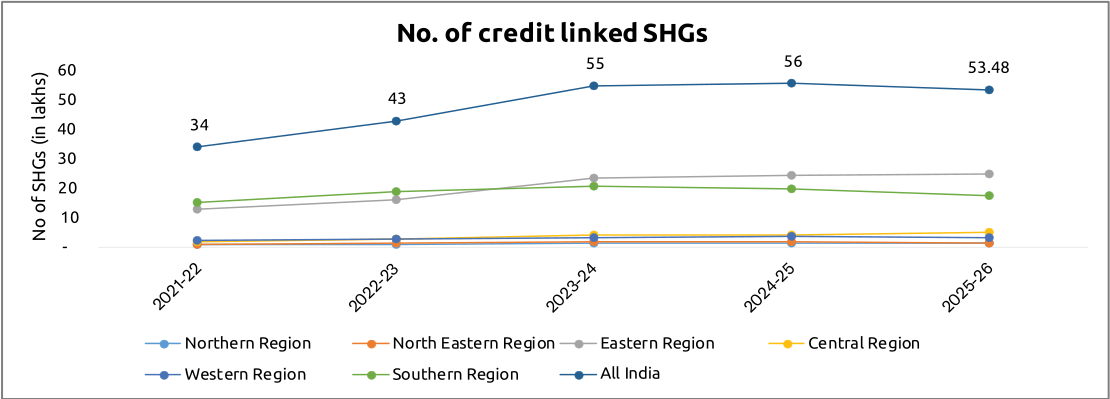
| 5 | Total No. of SHGs credit linked during the financial year (in Lakh) | 53.48 | 55.57 | -2.09 |
| 6 | Total Amount disbursed during the financial year (₹ in Cr.) | 2,21,944 | 2,08,283 | 13,662 |
| 7 | Number of Households covered (in Cr.) | 16.95 | 17.1 | -0.15 |
| 8 | Non-Performing Asset (NPA) | 2.00% | 1.74% | 0.26% |
5.3 SHG-BLP Activity since Inception
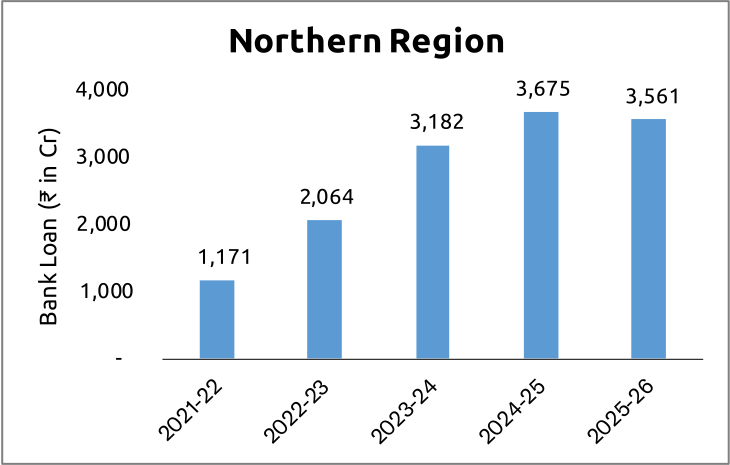
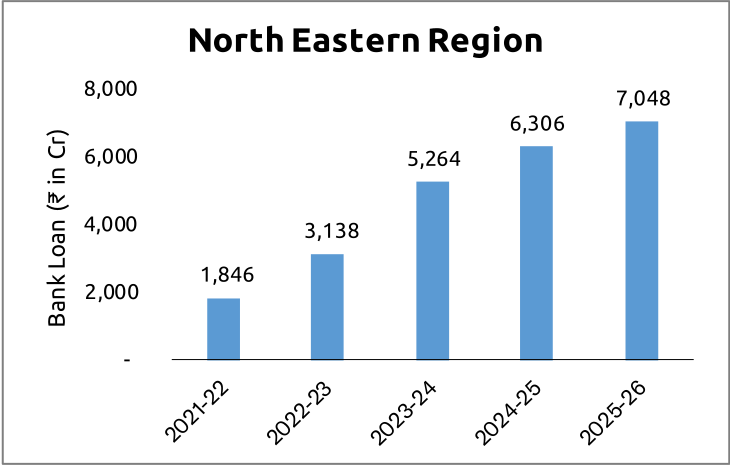
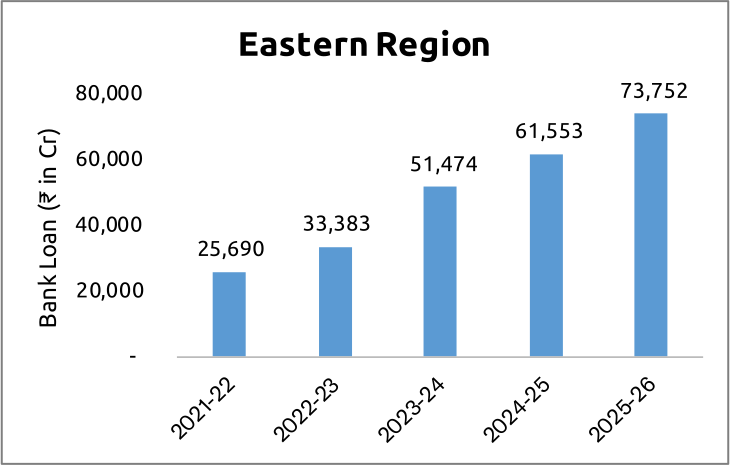
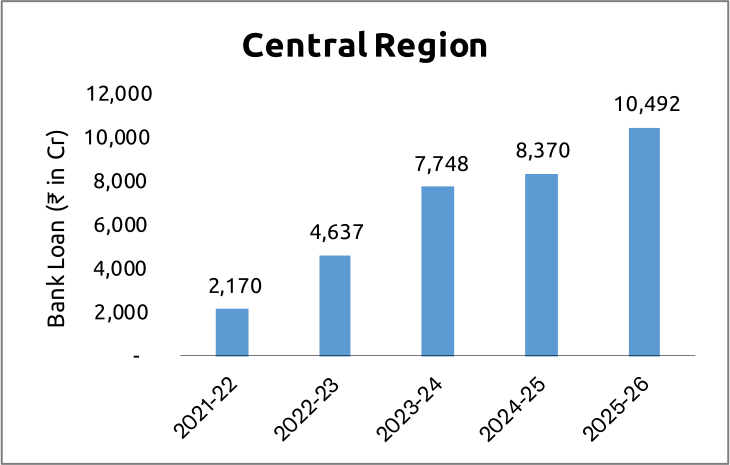
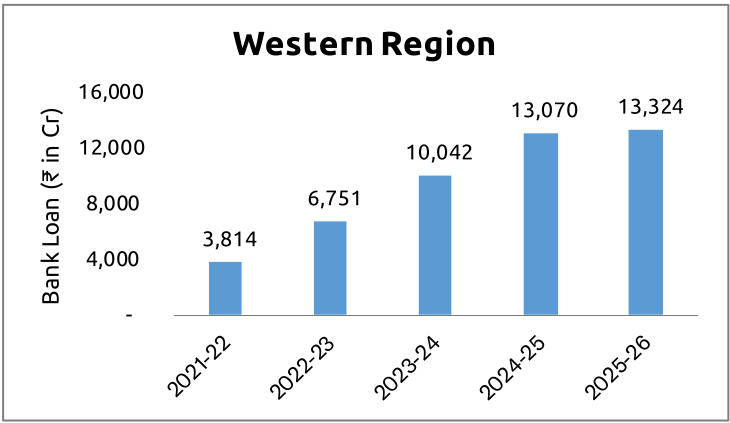
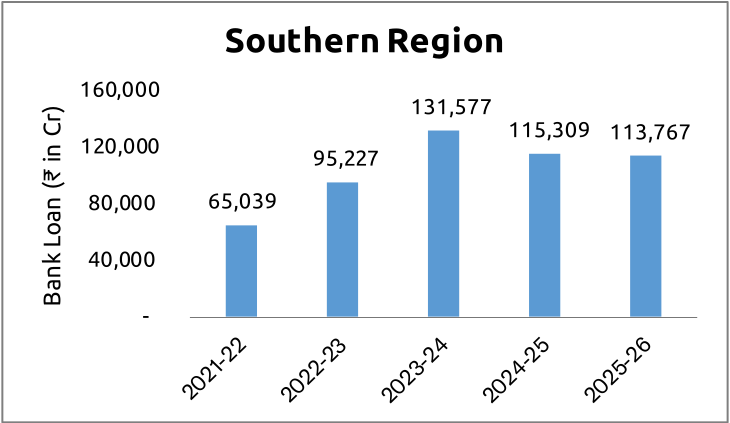
The programme has grown steadily over the past 35 years. Both the number of credit-linked SHGs and the bank loan disbursed have grown significantly since the year 2000. The growth in savings-linked SHGs by 1.63% during FY 2025-26, alongside a 11.53% increase in savings, indicates continuing deepening of financial intermediation within the SHG ecosystem. Across the regions the outreach and credit disbursement have increased manifold, showcasing the enduring strength of SHG-BLP. However, region-wise growth has not been uniform, indicating the varying maturity levels of the SHGs formed, which form the bedrock for the success of the SHG-BLP. The region-wise trend in the spread of credit linkage of SHGs is shown in Figure 5.1.
Figure 5.1: Historical Trend in Credit Linkage and Bank Loan Disbursed
5.3.1 Saving performance of SHG-BLP
Regular thrift remains the foundation of the SHG-Bank Linkage Programme, reflecting the principle of “first saving, then credit.” Members make periodic contributions - weekly, fortnightly, or monthly - to build a common group fund. This fund is initially used for internal lending, enabling members to meet small and immediate credit needs while developing financial discipline and repayment behaviour. Surplus funds are maintained in a savings account opened in the name of the SHG with a bank, providing the group with a secure formal savings mechanism and establishing its relationship with the banking system. The RBI enabled SHGs to open bank account and do the transactions, although they are informal group, in its historical decision of 1992. Thus, the keep their surplus savings and also avail of credit through these accounts.
As of 31 March 2026, total savings under SHG-BLP grew by 11.53% year-on-year, reaching ₹79,669 crore, reflecting strong financial discipline and effective corpus mobilisation among SHGs. The number of savings-linked SHGs rose by 1.63% to 145.63 lakh. An important compositional change was the continued shift towards exclusive women SHGs. Savings-linked women SHGs rose to 131.06 lakh, constituting 90.35% of all savings-linked groups.
Figure 5.2: Region-wise Progress of Saving Linkage of SHGs with Banks during FY 2025-26
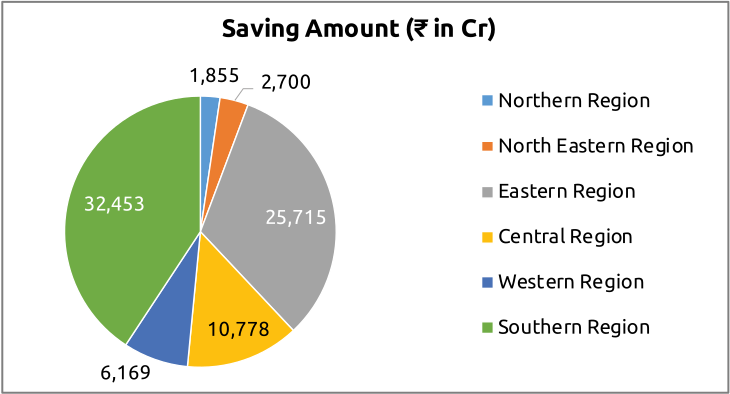
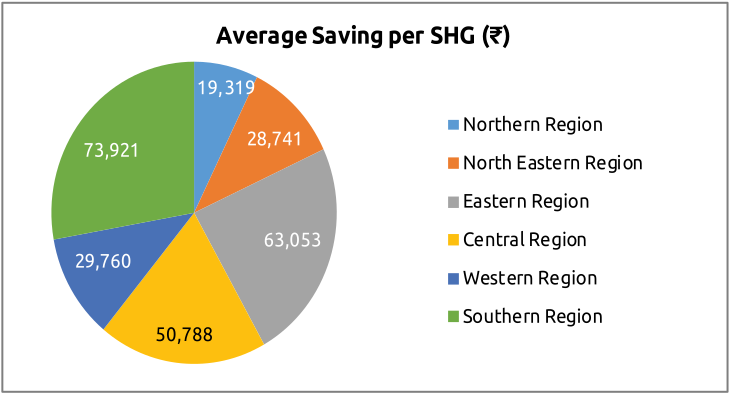
Regionally, the Southern and Eastern zones led the savings figures with ₹32,453 crore and ₹25,715 crore, respectively. In terms of the number of savings-linked SHGs, growth was recorded in all regions except the Western region. The Southern region reported the highest average savings per SHG at ₹73,921, followed by the Eastern region at ₹63,053, while the Northern region recorded the lowest at ₹19,319.
Figure 5.3: Agency-wise Savings of SHGs with Banks as on 31 March 2026
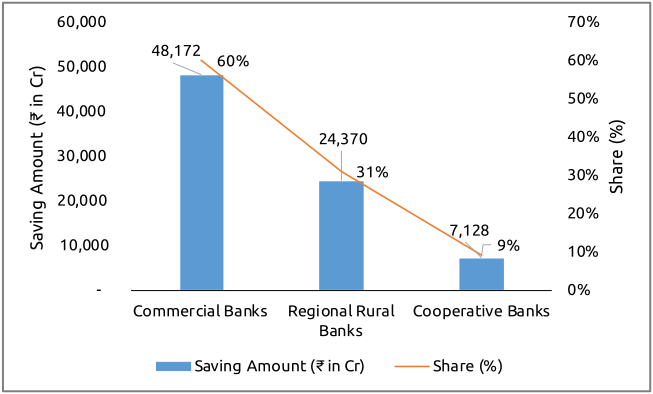
Commercial Banks, with their extensive network and outreach, financial strength, technological advancements, risk management practices and professional expertise, continued to hold the maximum share of SHG savings, accounting for 60% of total savings mobilised of ₹48,172 crore followed by RRBs at ₹24,370 crore (31%) and Cooperative Banks at ₹7,128 crore (9%). RRBs continued to have a relatively stronger presence in the North Eastern and Central regions. The programme has also shown a gradual shift towards women-centred and NRLM-supported SHG institutions. Savings-linked SHGs promoted under DAY-NRLM2 constituted 105.55 lakh groups as of 31 March 2026. In terms of savings value, NRLM groups accounted for ₹61,365 crore. Similarly, the number of saving linked SHGs promoted under DAY-NULM3 constituted 6.1 lakh as on 31 March 2026 and the corresponding savings amounted to ₹ 4,457 crore.
2 https://www.pib.gov.in/PressReleasePage.aspx?PRID=2181702®=3&lang=2
3 https://www.pib.gov.in/PressReleaseIframePage.aspx?PRID=2037057®=48&lang=2
5.3.2 Credit disbursement to SHGs
Over the past decade, credit disbursement through the SHG Bank Linkage Programme has grown substantially, with 53.48 lakh SHGs accessing fresh loans totalling ₹2,21,944 crore in FY 2025-26. While the number of SHGs availing loans declined by 3.76% over the previous year, the value of loans disbursed increased by 6.56%. This resulted in an increase in the average loan disbursed per SHG between FY 2024-25 and FY 2025-26. The trend indicates deeper credit engagement with existing and relatively mature SHGs, including repeat financing and larger loans for livelihood and income-generating activities, rather than expansion driven primarily by new credit-linked groups.
Figure 5.4: Region-wise Loan Amount Disbursed to SHGs during FY 2025-26
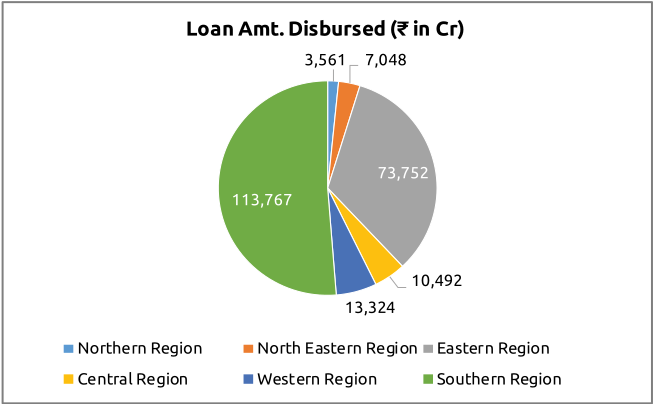
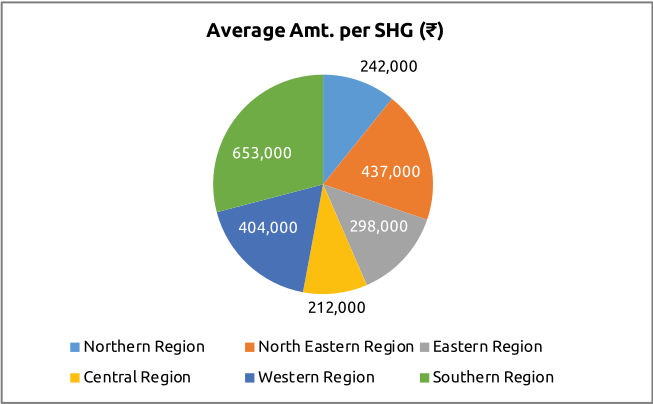
The Southern states continued to have higher average loan disbursements, reflecting a relatively mature SHG credit ecosystem, stronger repeat financing and higher credit absorption capacity in these states. The states in the Northern and Central regions continued to record relatively lower average loan disbursements, indicating scope for strengthening credit planning, livelihood-based lending and repeat credit linkage.
Figure 5.5: Agency-wise Credit Disbursement to SHGs during FY 2025-26
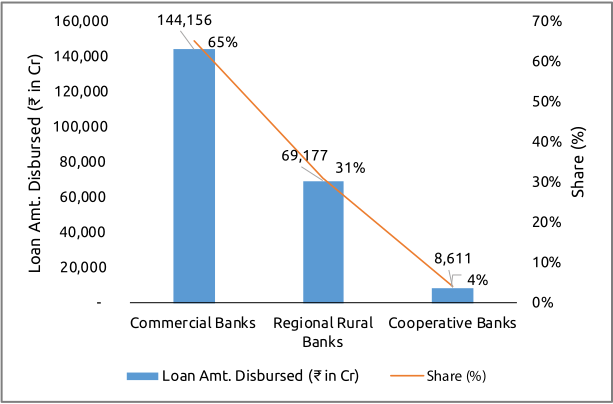
Commercial Banks accounted for the larger share of loans disbursed during the year at ₹1,44,156 crore (65%), followed by RRBs at ₹69,177 crore (31%) and Cooperative Banks at ₹8,611 crore (4%). Under DAY-NRLM, credit was extended to 43.62 lakh SHGs during the year FY 2025-26, up 1.44%, with total credit disbursed of ₹1,81,983 crore. Under DAY-NULM, Credit was extended to 1.82 lakh SHGs, a decrease of 6.19%, with total credit disbursed of ₹11,395 crore during FY 2025-26.
5.3.3 Loans outstanding under SHG-BLP
The outstanding bank loan portfolio under SHG-BLP increased by 9.47% during FY 2025–26 to ₹3,33,077 crore, despite a marginal decline in the number of SHGs with loans outstanding from 84.94 lakh to 83.24 lakh. The average loan outstanding per SHG increased to ₹4.00 lakh, compared with ₹3.58 lakh in the preceding year. This indicates the growing support from the banking system for the SHG Bank linkage programme.
Figure 5.6: Region-wise Loan Outstanding with SHGs as on 31 March 2026
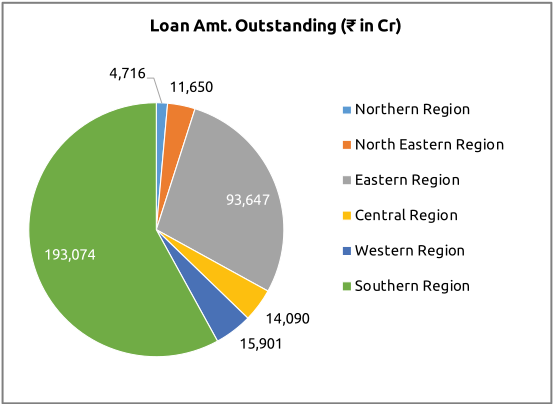
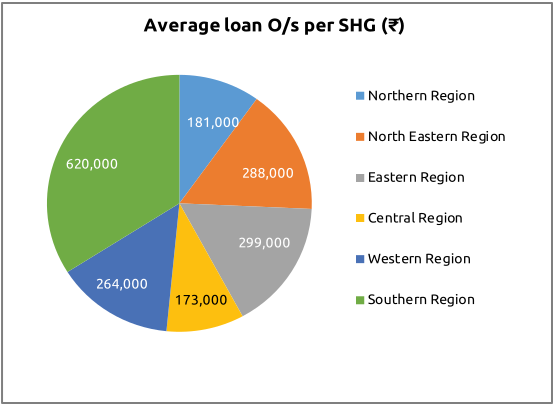
Figure 5.7: Agency-wise Loan Outstanding against SHGs as on 31 March 2026
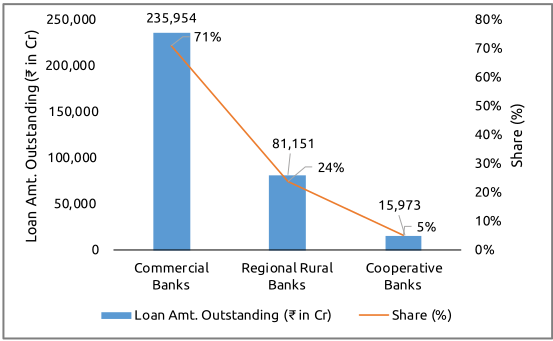
The Southern region maintained the pole position in total outstanding loans at ₹1,93,074 crore, followed by the Eastern region at ₹93,647 crore. The larger share of credit linkage to SHGs is by Commercial Banks, followed by Regional Rural Banks, while Cooperative Banks contribute a comparatively smaller share. As on 31 March 2026, Commercial Banks accounted for 71% of outstanding loans to SHGs. Despite their smaller operational scale, RRBs held a notable 24% share by amount, reflecting their growing role in rural finance, with a substantial presence in the Central, North Eastern and Eastern regions. Cooperative Banks, although limited in reach, contributed approximately 5% of the overall credit linkage. Under DAY-NRLM, the number of SHGs with credit outstanding increased by 2.53% to 66.90 lakh as on 31 March 2026, with the outstanding loan amount rising by 11.17% to ₹2,68,722 crore. Under DAY-NULM, the number of SHGs with outstanding credit declined by 6.88% to 3.79 lakh, while total outstanding credit rose by 11.79% to ₹18,273 crore.
5.3.4 Non-Performing Assets (NPAs) in SHG-BLP
The SHG Bank linkage programme has historically shown the best repayment performance among comparable credit portfolios. After several years of steady improvement, FY 2025-26 saw a mild reversal: the overall level of NPAs on bank loans extended to SHGs rose to 2.00% as on 31 March 2026, from 1.74% as on 31 March 2025. The overall stress faced by the microfinance sector must have also had its effect in the increase of NPAs in SHG-BLP, as there are several members who have loans from both the systems.
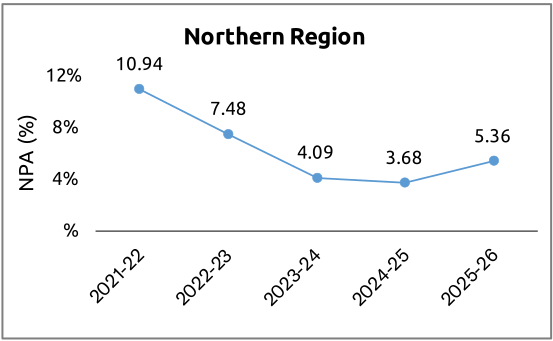
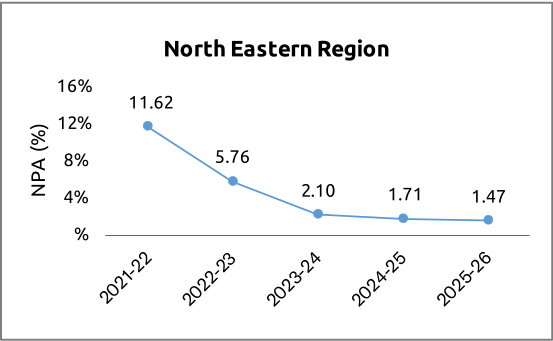
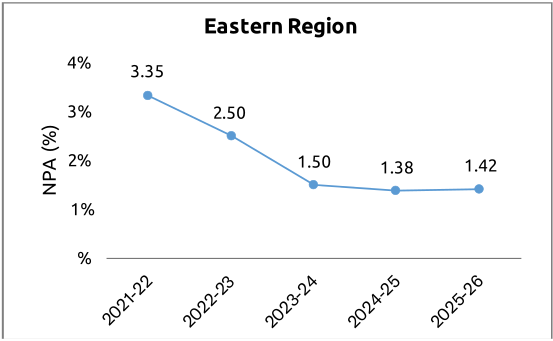
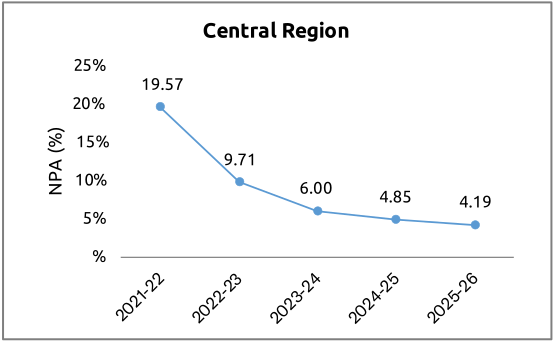
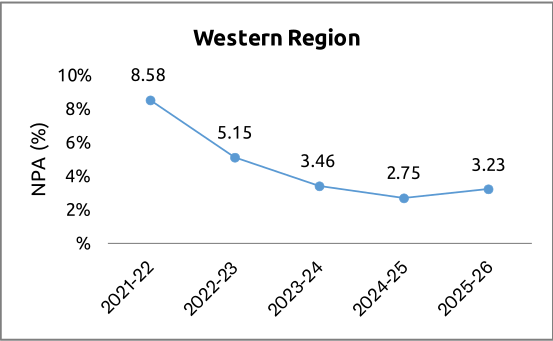
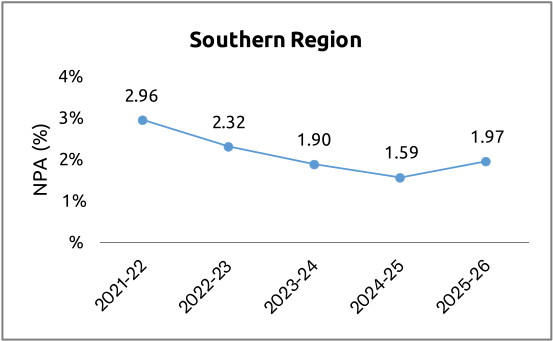
Region-wise, the trend was mixed. The NPA percentage declined in the North Eastern region (from 1.71% to 1.47%) and the Central region (from 4.85% to 4.19%), but increased in the Northern (3.68% to 5.36%), Eastern (1.38% to 1.42%), Western (2.75% to 3.23%) and Southern (1.59% to 1.97%) regions. The Northern region now records the highest NPA ratio in the programme, displacing the Central region. Among the lenders, Regional Rural Banks demonstrated the strongest asset quality at 1.22%, followed by Commercial Banks at 1.93%. Loans extended by Cooperative Banks continued to show significantly higher NPAs at 7.01%, although they had limited exposure to SHG lending. Cooperative Banks clearly need to strengthen asset quality, monitoring and portfolio management, alongside targeted capacity building and recovery support.
Figure 5.8: Trend in Region-wise and Agency-wise Gross NPAs in SHG-BLP
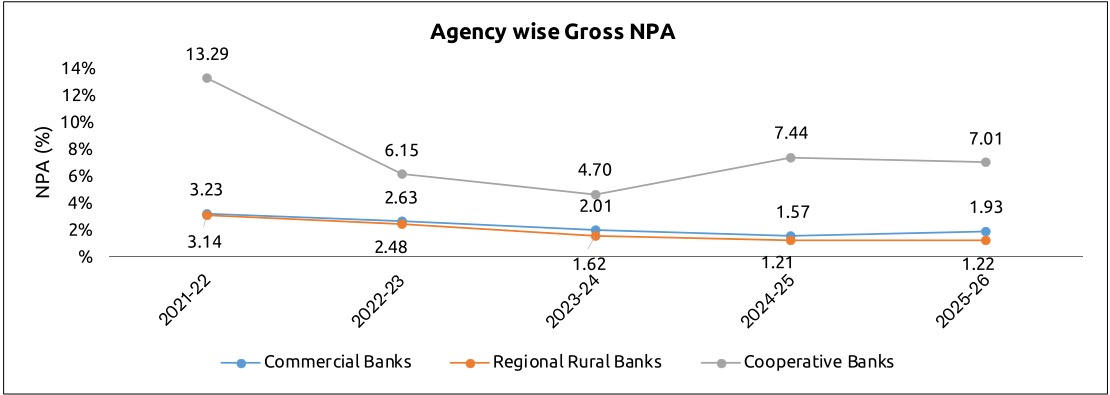
Despite the continued expansion in the value of savings, credit disbursement and loan outstanding, a substantial credit-linkage gap persists. As of 31 March 2026, only 83.25 lakh of the 145.63 lakh savings-linked SHGs had loans outstanding with banks, implying a credit gap of 42.84%. This indicates significant scope for improving the conversion of savings-linked SHGs into credit-linked groups, particularly through timely first-cycle and repeat credit, better bank-SHG engagement and stronger livelihood-based credit planning. The programme also continues to show regional variation. The Southern and Eastern regions remained the largest contributors to the SHG-BLP, together accounting for a substantial share of savings-linked SHGs, savings balances, loan disbursements and loan outstanding. The variation in average savings, credit linkage, loan size and credit gap across regions points to the need for differentiated strategies based on SHG maturity, institutional capacity, livelihood opportunities and bank presence.
Going forward, the focus of SHG-BLP needs to move beyond the expansion of savings accounts and group loans towards improving the quality of financial access. This includes reducing the credit-linkage gap, strengthening repeat credit, expanding enterprise finance for mature SHGs and individual members, improving digital financial capability, and facilitating access to insurance, pensions, health protection and other social-protection schemes. The next phase of SHG-BLP should therefore be assessed not only by the number of groups linked with banks, but also by its contribution to women-led enterprise, household resilience, sustainable livelihoods and economic empowerment
5.4 Joint Liability Group Financing: Complementing the SHG-Bank Linkage Channel
Joint Liability Group (JLG) financing is an important complementary channel within India’s broader microfinance architecture. While the SHG-Bank Linkage Programme is savings-led and built around group mobilisation, internal lending and collective financial management, the JLG model is primarily a credit-led mechanism designed to improve access to formal loans for individuals who may lack conventional collateral, documented land titles or a prior banking relationship. JLGs are particularly relevant for small and marginal farmers, tenant farmers, sharecroppers, oral lessees, landless cultivators, livestock rearers and other rural producers engaged in livelihood activities.
Under the JLG model, a small group of individuals with similar economic activities or livelihood interests accesses credit on the basis of mutual guarantee and joint liability. The model enables members to access loans individually or collectively, while peer accountability substitutes for conventional collateral. It can therefore help formal lenders reach borrowers who are otherwise excluded from institutional credit because of informal tenancy arrangements, limited asset ownership or inadequate documentation.
The JLG channel should be viewed as distinct from, rather than interchangeable with, the SHG-Bank Linkage Programme. SHGs generally build financial discipline through regular savings, internal lending and collective decision-making before accessing bank finance. In contrast, JLGs are primarily formed to facilitate credit access for economically active individuals, particularly in agriculture and allied sectors. The two models serve different, but overlapping, segments of financially excluded households
NABARD initiated a pilot project for financing Joint Liability Group (JLG) of landless and tenant farmers in 2004-05, primarily to provide a platform for credit linkage for such farmers. Since 2009-10, alongside providing refinance support to banks, NABARD has been awarding grant assistance to banks and eligible agencies (JLG Promoting Institutions, or JLGPIs) to support the formation, nurturing and capacity building of JLGs and their stakeholders.
Figure 5.9: No. of Credit-Linked JLGs (cumulative, in Lakh)
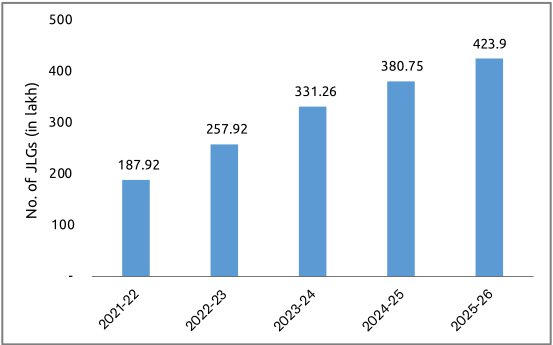
Figure 5.10: Credit Disbursed to JLGs (cumulative, ₹ in crore)
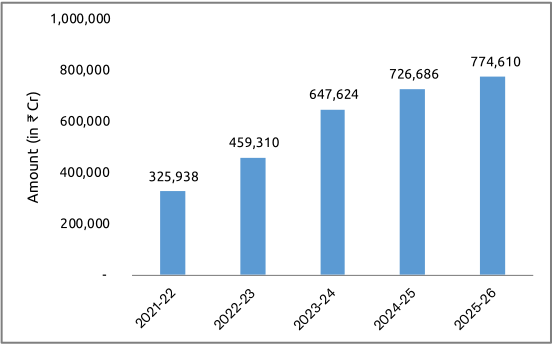
Cumulatively, JLGs (all JLG including MFI JLGs financed by banks) credit-linked stood at 423.9 lakh as on 31 March 2026, registering year-on-year growth of 11.33%, with the Southern and Eastern regions recording the highest absolute growth. Cumulative loans disbursed to JLGs by banks reached ₹7,74,610 crore, an increase of 6.59% from ₹7,26,686 crore as on 31 March 2025.
Box 5.1: MFI Accelerator Programme (MAP): A focused initiative of NABARD for strengthening smaller Microfinance Institutions
The MFI Accelerator Programme is a mentor led capacity building initiative conceptualised by NABARD with the help of Sa-Dhan (MFI SRO recognised by RBI) as a pilot initiative to strengthen identified 21 smaller MFIs operating in rural and underserved regions. The programme seeks to help participating MFIs graduate to the next level of institutional maturity by enhancing their governance systems, technology adoption, operational efficiency, risk management practices, human resource capabilities, regulatory compliance, and access to funding.
Through a structured model of training, mentoring, baseline assessments, and performance tracking, the programme provides customized support to MFIs to address specific institutional gaps and improve their sustainability and outreach. By strengthening the capabilities of smaller MFIs, the programme aims to expand responsible financial services to underserved communities, promote financial inclusion, and support livelihood generation and inclusive rural development.
The pilot aims to strengthen 21 select MFIs with an Asset Under Management (AUM) ranging from ₹10 crore to ₹500 crore, particularly those having at least 50% rural borrowers, satisfactory repayment performance and past record of profitability. Participating institutions undergo an extensive diagnostic assessment to identify areas of interventions. Based on the findings, a tailored development roadmap is prepared for each MFI, supported by mentors from the MFI industry who guide institutions in improving governance frameworks, strengthening risk controls, enhancing digital capabilities, diversifying products, and improving operational sustainability. The programme also facilitates knowledge sharing on regulatory developments, emerging technologies, customer protection principles, and best practices in sustainable microfinance.
Quick Insights from Baseline Survey
- The participating MFIs were found to be broadly compliant and operationally stable, with strengths in formalisation, board functioning and financial performance.
- Around 71% of MFIs were assessed in the medium-risk category and 29% in the high-risk category.
- Key gaps were observed in governance depth, risk systems, HR capacity, digital integration and operational efficiency.
- Financial sustainability was found to be under pressure due to high cost of funds and elevated cost-to-income ratios.
Courtesy: National Bank for Agriculture and Rural Development (NABARD)
5.5 SHG Graduation to Enterprises
The SHG movement in India has evolved from a savings-and-credit mechanism into an important platform for women-led livelihoods, micro-enterprise development and local economic participation. While regular savings, internal lending and bank linkage remain the foundation of the SHG-Bank Linkage Programme, the next stage of inclusion lies in enabling mature SHG members to undertake viable enterprises, improve household incomes and participate more effectively in markets.
5.5.1 Graduation Pathways: From SHG to Enterprise
The enterprise journey of SHG members is generally gradual and non-linear. Members may enter, exit or move between stages depending on business performance, seasonal income patterns, household responsibilities, market conditions and access to finance. A typical progression begins with collective savings and small internal loans, followed by group-based bank credit for livelihood activities, and subsequently moves towards individual or collective enterprise financing.
Table 5.2: SHG Graduation Pathway
| Sl. No. | Stage | Focus | Institutional Support |
|---|---|---|---|
| 1 | Financial Inclusion | Savings, internal lending, building credit history | NRLM, Banks, NABARD, CSOs, Sa-Dhan |
| 2 | Livelihood Diversification | Identification of livelihood opportunities, skill mapping and skill development. | NRLM, Banks, NABARD, CSOs |
| 3 | Micro-Enterprise Initiation | Setting up small individual/group enterprises through Credit/Grant support | NRLM, Banks, NABARD, MUDRA, Govt. Departments |
| 4 | Enterprise Scaling | Market linkages, formalisation, MSME integration | NRLM, MUDRA (Tarun/Tarun Plus), Banks, MoMSME, NABARD, Sa-Dhan |
5.5.2 Institutional Approaches on Enterprise Graduation for SHGs/Members
Enterprise graduation among SHG members requires coordinated support from government programmes, banks, development finance institutions, training agencies, market platforms and community institutions. The institutional ecosystem plays an important role in helping women move from basic financial inclusion to enterprise ownership, growth and market participation.
5.5.2.1 Government of India and DAY-NRLM initiatives
The Ministry of Rural Development, through the Deendayal Antyodaya Yojana–National Rural Livelihoods Mission (DAY-NRLM), has positioned enterprise promotion as an important component of the SHG ecosystem. DAY-NRLM supports SHG members and their households through livelihood planning, skills development, credit linkage, enterprise incubation, community institutions and convergence with other government programmes.
The Start-up Village Entrepreneurship Programme (SVEP) is a key initiative under DAY-NRLM for promoting rural non-farm enterprises. The programme supports SHG members and their family members in setting up and strengthening micro-enterprises through finance, incubation and skill development. A key feature of the programme is the Community Resource Person-Enterprise Promotion cadre, which provides local-level support for business planning, credit linkage, training, market access and early-stage handholding. Around 3.74 lakh non-farm enterprises had been promoted under SVEP as of 30 June 2025.
The Lakhpati Didi initiative provides a clear income-oriented framework for SHG graduation. The initiative seeks to enable SHG women to achieve sustainable annual household incomes of at least ₹1 lakh through diversified livelihoods, enterprise activities, skill development, access to finance and market linkages. As of August 2026, 3.44 crore women had been identified or reported as Lakhpati Didis, with Maharashtra, Bihar and West Bengal among the leading states. The Government has set a revised target of creating 6 crore Lakhpati Didis by March 2029.
The Pradhan Mantri MUDRA Yojana (PMMY) provides an important credit bridge for SHG members graduating from group-based loans to individual micro-enterprise finance. Through Shishu, Kishor, Tarun and Tarun Plus categories, the scheme offers collateral-free loans for non-farm micro and small enterprises. The Kishor and Tarun categories are particularly relevant for mature SHG members seeking to expand enterprises beyond the scale of regular group loans. During FY 2025-26, 15.36 lakh MUDRA loans were sanctioned to NRLM/NULM beneficiaries, amounting to ₹33,667.52 crore, of which ₹30,884.81 crore was disbursed.
Enterprise finance is also being strengthened through the DAY-NRLM’s engagement with banks. The Memorandum of Understanding with Public Sector Banks and IDBI Bank has encouraged the development of dedicated enterprise-credit products for mature SHG women. Such products aim to facilitate individual enterprise loans with larger ticket sizes and more suitable repayment structures. The FY 2026-27 DAY-NRLM credit plan proposes a distinct focus on individual SHG-member financing, with a target of 13.52 lakh individual enterprise loans aggregating ₹13,516 crore and a proposed minimum loan size of ₹1.50 lakh per loan.
The Jan Samarth Portal can also support enterprise graduation by providing a common digital platform through which SHG members and rural entrepreneurs can identify eligible credit-linked schemes, assess eligibility and access institutional finance. The portal may facilitate linkages with MUDRA, PMEGP, agriculture infrastructure and other enterprise-support schemes.
The Government’s proposed SHE-MARTs, announced in the Union Budget 2026-27, may provide an additional market-access channel for SHG enterprises. Envisaged as community-owned retail outlets operated by Cluster Level Federations, SHE-MARTs can provide SHG entrepreneurs with physical market space, product visibility, branding support and stronger consumer linkages.
5.5.2.2 NABARD initiatives
NABARD plays a significant role in strengthening enterprise capabilities among SHG members through capacity building, livelihood development, market support and institutional linkages. Its interventions are particularly important in helping SHG members progress from subsistence activities to more viable micro-enterprises.
The Micro Enterprise Development Programme (MEDP) supports SHG members through skill upgradation, entrepreneurship development and business-management training. It seeks to strengthen the ability of mature SHG members to establish or improve micro-enterprises by building technical skills, improving product quality and supporting business planning. During 2025-26, 5310 SHG members were trained through 172 MEDPs with grant assistance of ₹1.61 crore for equipping them with livelihood skills. Cumulatively, 6.28 lakh SHG members have been trained through 21,225 MEDPs with total grant support of ₹64.78 crore as on 31 March 2026.
The Livelihood and Enterprise Development Programme (LEDP) adopts a value-chain and cluster-based approach to enterprise promotion. It supports groups of SHG members in contiguous villages to undertake farm and non-farm livelihood activities, develop producer groups and improve access to production, processing, value addition and markets. This approach is particularly relevant for activities that require aggregation, common facilities, collective procurement and market coordination. During 2025-26, 9,672 SHG members were provided skill and entrepreneurship training through 112 LEDPs with an expenditure of ₹8.06 crore. As on 31 March 2026, 3.26 lakh SHG members have been supported through 2,593 LEDPs with grant support of ₹139.13 crore. The main activities included Handicrafts, Paintings, Tailoring, Fashion Designing and Embroidery, Food Processing and Value Addition, and Goat Farming/Goat Rearing.
The m-Suwidha programme - Microenterprises through Skill Upgradation for Women - is a flexible, Detailed Project Report-based intervention for SHG members seeking to establish enterprises at a larger scale. The programme supports end-to-end enterprise development through assessment of skill gaps, identification of suitable occupations, training through knowledge partners, enterprise strengthening, market tie-ups and facilitation of credit support from banks and financial institutions. As on date, ₹2.68 crore grant has been sanctioned for five projects in four states (two in Tamil Nadu, one each in Telangana, Assam and Andhra Pradesh) to strengthen the livelihood of 2300 SHG members of 09 districts.
NABARD’s market-linkage initiatives also support SHG entrepreneurs by facilitating access to digital and physical markets. Through onboarding support for ONDC and other e-commerce platforms, SHG producers can improve product visibility, access customers beyond local markets and develop digital commerce capabilities. During FY 2025-26, NABARD-supported SHG sellers generated 1,583 orders through the MyStore page on ONDC, with a turnover of approximately ₹8.03 lakh.
The proposed NABUnnati Kendras are intended to function as local enterprise-support hubs by providing handholding for enterprise identification, business planning, statutory registration, credit facilitation, branding, digital onboarding and market linkage. The initiative has been launched as a pilot in six states, with the first centre sanctioned in East Khasi Hills district of Meghalaya.
NABARD’s RuTAGe Smart Village Centres may also contribute to enterprise graduation by improving access to field-tested technologies, technical advisory, demonstrations and local enterprise opportunities. The centres are intended to connect rural households, SHGs, producer organisations, Panchayats and local institutions with technology providers, research organisations and start-ups across agriculture, renewable energy, water, sanitation, healthcare, education and other relevant sectors.
5.5.2.3 Sa-Dhan’s initiative for women enterprise promotion in SHGs
Sa-Dhan has entered into an MOU with National Rural Livelihood Mission (NRLM) for working as a Technical Support agency for promotion of women enterprises among SHGs. This project is supported by Gates Foundation. Accordingly, Sa-Dhan has taken up 4 states, viz. Assam, Chhattisgarh, Jharkhand and West Bengal, where dedicated teams are placed to support the local SRLMs in training the Vitta Sakhis and mentors/ SRLM officials. The teams also liaise with the banks in the states/ districts and help in credit linkage of the identified beneficiaries. The programme has made significant progress across its key objectives:
- Enterprise Finance & Portfolio Quality: Since inception, 1,85,305 SHG members across the intervention states have been financed, with ₹2,04,374.69 lakh in cumulative finance. Portfolio quality remains strong, with NPAs below 0.5% in Assam and West Bengal, below 1% in Jharkhand, and below 2% in Chhattisgarh.
- Capacity Building: 12,604 participants have been trained through new and refresher programmes, including 9,092 Vitta Sakhis (7,228 new and 1,864 refresher) and 3,512 SRLM officials and other cadres, including SRPs/NRPs (3,178 new and 334 refresher).
- Bank Integration: 12 Public Sector Banks have developed Business Rule Engines (BREs) to support digital appraisal and processing, while IELA has been integrated with six PSBs - Canara Bank, Indian Bank, Indian Overseas Bank, Bank of India, Union Bank of India and Punjab National Bank. Work is underway to expand integration to RRBs through the Jan Setu framework.
- Evidence & Learning: A multi-state comparative study has been initiated across Andhra Pradesh, Tamil Nadu, Maharashtra, Rajasthan, Madhya Pradesh and Tripura to examine the institutional, financial, community and socio-economic factors influencing women’s access to, uptake and utilisation of individual enterprise finance, and identify practices that can strengthen enterprise finance outcomes.
Individual Enterprise Loan Application (IELA)
Sa-Dhan efforts to support the SRLMs have also resulted in developing a digital platform for the submission of the loan application to bank branches for their monitoring and tracking. Also, it provides a seamless way to get the loan application sanctioned in a shorter time. The application is built on the existing LokOS and JanSamarth portal and integrating them for smoother data flow and validations required by banks. The IELA was launched nationwide by the Hon’ble Union Minister for Agriculture and Rural Development Shri. Shivraj Singh Chouhan on 21 February 2026 and has been rolled out to the entire country for its adoption, following pilot testing and field validation. In the intervention states, 29,729 applications have been initiated, of which 16,477 have been submitted to banks and 2,649 sanctioned. The IELA architecture, workflow and system framework is provided as under:
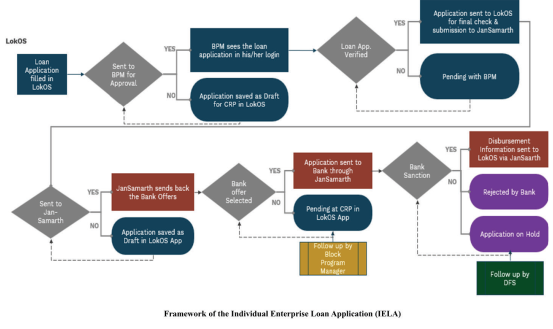
Framework of the Individual Enterprise Loan Application (IELA)
Conclusion
Together, these institutional initiatives demonstrate that enterprise graduation requires a combination of group-based financial inclusion, individual enterprise finance, skill development, incubation, market access, formalisation and technology support. The effectiveness of these interventions will depend on their ability to translate programme outreach into viable enterprises, sustained income growth, improved market participation and resilient livelihoods for SHG members.
Box 5.2: Sa-Dhan’s Partnership with DAY-NRLM Enabling Formal Finance for Women-Led Enterprises
Sa-Dhan, with support from the Gates Foundation, is providing Technical Assistance to the National Rural Livelihoods Mission (DAY-NRLM) and select SRLMs to strengthen systems for individual enterprise financing for women emerging from the Self-Help Group (SHG) ecosystem. The Gates Foundation approved the project in November 2023, followed by a formal MoU between Sa-Dhan and NRLM in March 2024. Under the partnership, Sa-Dhan functions as the Technical Support Agency (TSA) for strengthening individual women enterprise financing systems.
The programme aims to facilitate access to finance for one million women entrepreneurs across four states over five years, while strengthening the institutional and community-level ecosystem required to support sustainable women-led enterprises. Sa-Dhan’s direct intervention is being undertaken across 19 districts in four states, namely Assam, Chhattisgarh, Jharkhand and West Bengal. These districts cover approximately 5.09 lakh SHGs, providing a focused platform for strengthening enterprise-financing systems within the SHG ecosystem.
Key Objectives
The programme is structured around the following key objectives:
- Expand Enterprise Finance: Contribute to DAY-NRLM’s goal of enabling 1 million SHG women entrepreneurs to access finance, supporting the Lakhpati Didi vision through sustainable, income-generating enterprises.
- Strengthen Credit Linkages & Processes: Work with SRLMs, PSU banks and RRBs to strengthen credit linkages, streamline loan processing and address operational bottlenecks.
- Build Institutional Capacity: Strengthen the capacity of SRLM officials, Vitta Sakhis and frontline cadres to facilitate enterprise financing and engage effectively with banks.
- Enable Digital & Quality Credit: Promote technology-enabled solutions such as Individual Enterprise Loan Application (IELA) to improve application, tracking and processing, while supporting sound credit appraisal and responsible lending.
- Generate Evidence & Learning: Document field experience, identify good practices and generate evidence to inform policy, programme improvement and scale-up of women-led enterprise financing.
Institutional Innovations & Sa-Dhan’s Technical Support
As the TSA, Sa-Dhan supports DAY-NRLM and select SRLMs in strengthening the ecosystem for scaled access to formal enterprise finance for women entrepreneurs. Its support spans policy and process development, institutional capacity building, bank engagement, digital solutions and knowledge generation. Key initiatives include:
- Vitta Sakhi and Mentor Policy Frameworks: Supporting the development of structured frameworks to strengthen the cadre ecosystem and provide technical handholding.
- CLF-based Enterprise Financing Model: Supporting a community-led model to facilitate small-ticket enterprise loans of up to ₹1 lakh through Cluster Level Federations.
- Udyam Gyan Learning Management System (LMS): Developing a technology-enabled platform for continuous learning and capacity building.
- Exposure Visits and Immersion Panchayats: Facilitating enterprise learning, peer exchange and practical exposure to successful enterprise models.
- Livestock Insurance and Financial Solutions: Supporting access to relevant financial solutions to address enterprise-related risks and financing needs.
- Bank and RRB Engagement: Supporting engagement with PSU banks and RRBs through SLBC, DLRC, BLBC and branch/regional/zonal forums to address credit-related bottlenecks and strengthen enterprise financing.
- Digital Credit Facilitation: Supporting the development and refinement of IELA and the wider digital ecosystem for enterprise loan application, processing and tracking.
- Knowledge, Evidence & Learning: Generating evidence, documenting field experience and supporting learning for continuous programme improvement and scale-up.
Key Achievements
Beyond the financing, capacity-building, bank-integration and evidence-generation progress outlined in the chapter, the year’s principal achievement was the operationalisation of digital credit facilitation at scale.
Digital Credit Facilitation: IELA was launched nationwide on 21 February 2026, following pilot testing and field validation. Across the intervention states, 29,729 applications have been initiated, 16,477 submitted to banks, and 2,649 sanctioned.
Way Forward
The next phase will focus on consolidating systems, strengthening digital and banking linkages, documenting outcomes and good practices, and supporting wider adoption of the enterprise-financing approach across the DAY-NRLM/SRLM ecosystem